A client requested me to create a fusion of two different dolls of mine they loved, in one single face.
Read MoreElixia - An interesting challenge!
in New Doll
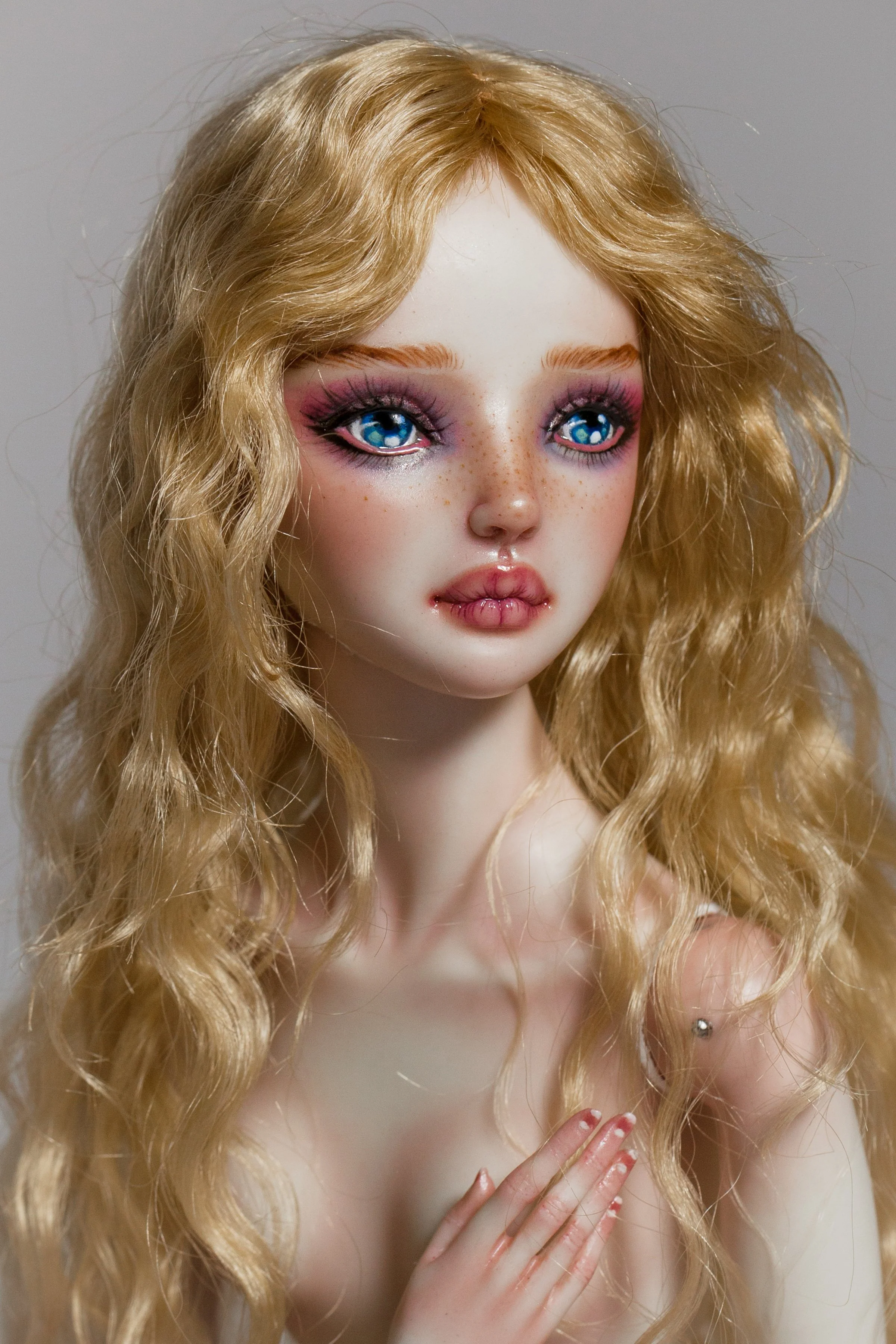
A client requested me to create a fusion of two different dolls of mine they loved, in one single face.
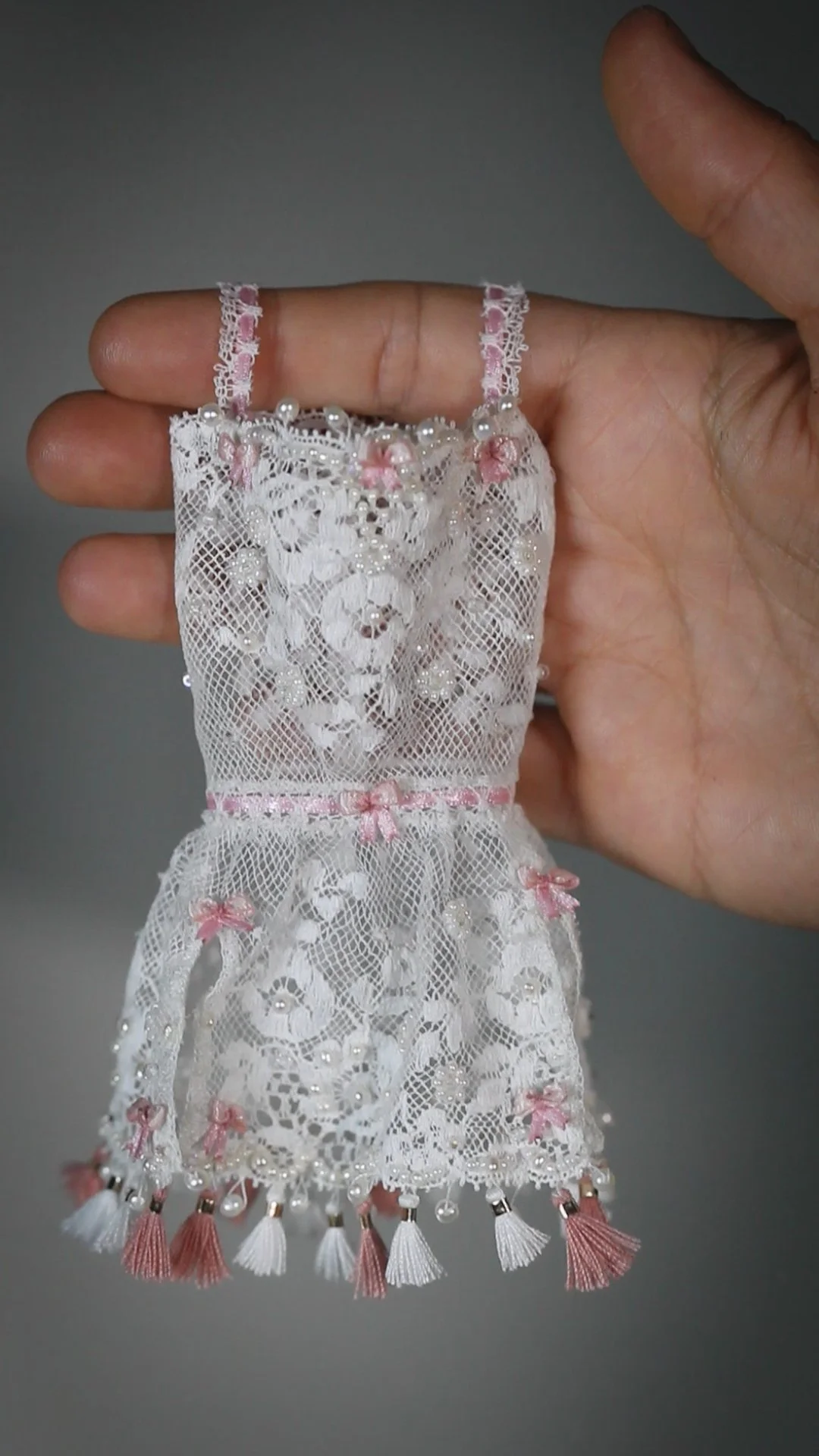
Read MoreI wanted this look for a photoshoot, so I spent a week constructing a dress from some vintage French lace and pearls…
Read MoreTo make my doll’s skin feel smooth like silk, I must sand it once again after the vitrification firing.
Read MoreOne of my least favourite parts of the process
Read MoreA closeup spin to show off this porcelain doll’s exquisite eyelashes, soft brows and shimmering eyeshadow. I’m very proud of the fine china-paint line work I’d done on her lashes. Because china-paint never dries on its own without being kiln-fired, the painting is always done wet-on-wet, which means creating fine, crisp lines is always a challenge. This also means there is very little margin for error, as even the tiniest mistake can ruin all the wet layers. But the challenge is worth the effort, because once fired, china-paint becomes eternal. 🤩
China-painting is without a doubt the most exciting and rewarding step of the entire porcelain doll-making process. I cherish and adore the tiny tools of my craft, because they enable me to articulate myself through non-verbal, visual language of art, and I love being able to “speak” it. These tools deserve respect and care, so I store them all neatly organized in a little Rimowa case, which I likewise, adore. Together they comprise my treasured china-paint kit. I call it My Prrrrecious!🥹 And hiss at anyone who tries to touch it. Just kidding, there is no hissing… maybe a little. 🤏🏻😅✌🏻
Disassembling a porcelain doll to add more china-paint layers to the face requires that I remove all glue traces from the neck joint and the wig magnet. Each China-paint layer needs to be fired in a ceramic kiln, and I don’t want the glue to burn. In theory, it should just burn off, but it could also possibly deposit a coating on the heating elements and ruin them. Why risk expensive hardware? 🤷♀️ Better be diligent, than sorry.
Anybody had any unfortunate kiln mishaps like that?
One of my absolute favourite custom orders from last year
Read MoreWork on the gothic bed for the Insomnia project continues. Last week I made a cover for the comforter from beautiful antique lace. It’s nowhere near finished. Right now it’s too stiff and I need to weigh it down in the corners with some beads, or something, to make it drape naturally around the bed.
I wanted to make the bedding look and feel very comforting and cozy, to contrast it with the inability to sleep in even the most soothing environment for those suffering from insomnia and anxiety.
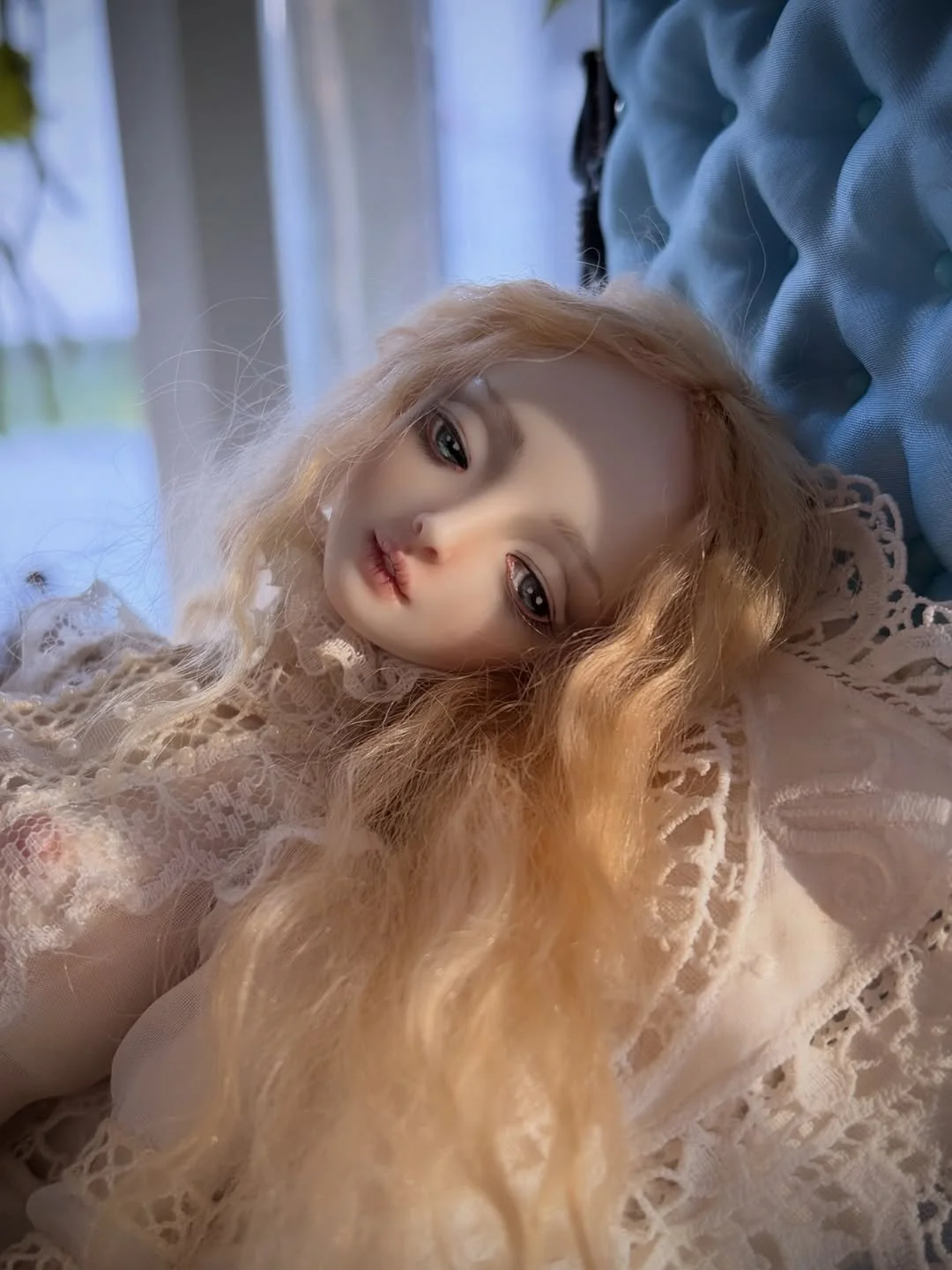
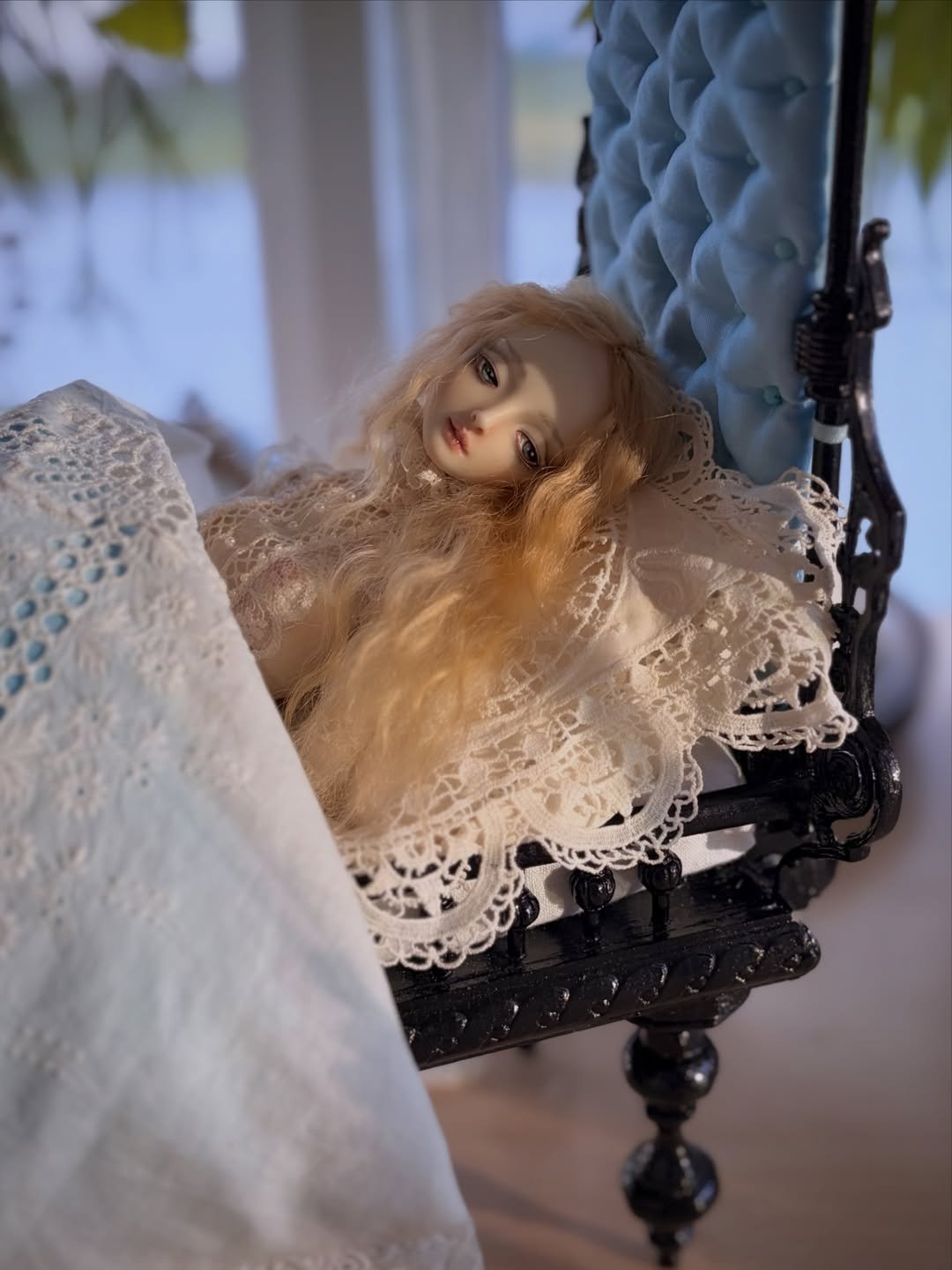
Right now my beloved personal doll Skyler is testing this bed, but I plan to make an insomniac doll for it once the bed is complete. Thank you for contributing your thoughts and opinions on the type of sleeping gown she should wear. 🙏 It’s all under consideration. Stay tuned. The work continues.
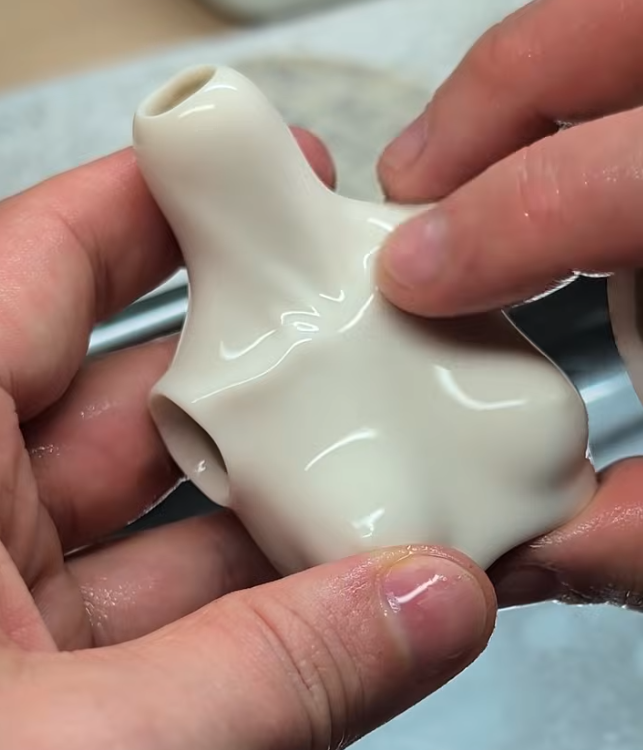
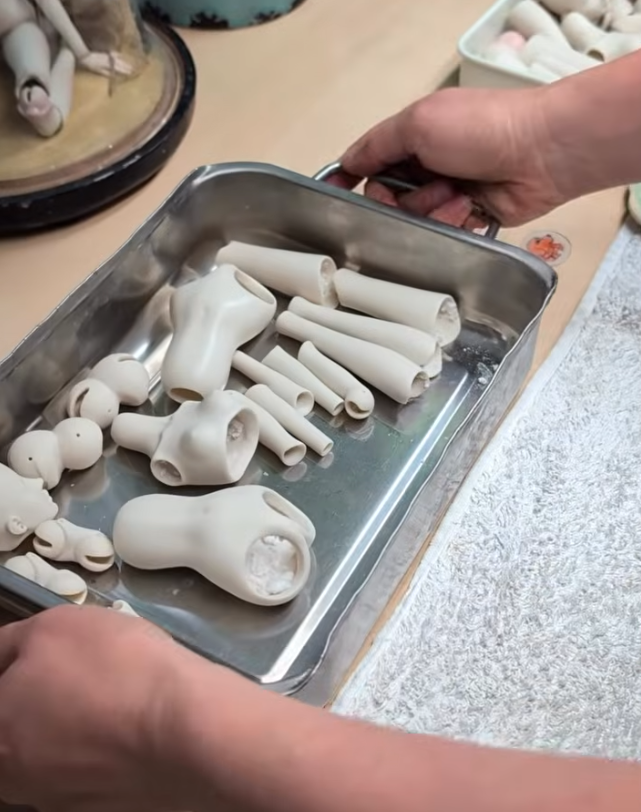
Demolding of slip-cast porcelain heads. One step closer to painting, but still two firings and a wet sanding to go before the porcelain matures enough for china paint. Wish me luck with all the kiln firings and as always, pray to the old fire gods!
It’s time to open my molds, and see how the parts turned out.
This process, takes place about 2 hours after casting. Plaster molds absorb the water from the slip, and the doll parts harden, shrink, and detach themselves from the molds.
In this stage, the parts are fragile like eggshells, so I have to hold them with a feather touch, or they will get crushed.
I open the molds one at a time, and work quickly to cut away the sprues, open up sealed cavities with a scalpel, and pierce holes for the pins with drill bits.
Once exposed to the air, the parts start drying quickly, so time is of the essence here.
But despite the need for speed, I find this to be the most relaxing and enjoyable part of the whole process, because at this point, I don’t need to worry flawless execution. That will come later, but for now, without the pressure of perfection, or the need for extreme concentration, I can just enjoy the flow of my work and get lost in the process.
This is porcelain slip, and that is how I slip-cast ball-jointed, porcelain dolls. Next video will be me opening these molds and taking out the doll parts. Any questions?
This project was inspired by my ongoing, life-long struggle with insomnia and anxiety.
Read MoreHey guys! You’ve been asking me where I’ve been, and if i’m ok, and I wanted to let you all know that I’ve been here in my studio, working on my special doll orders the whole time.
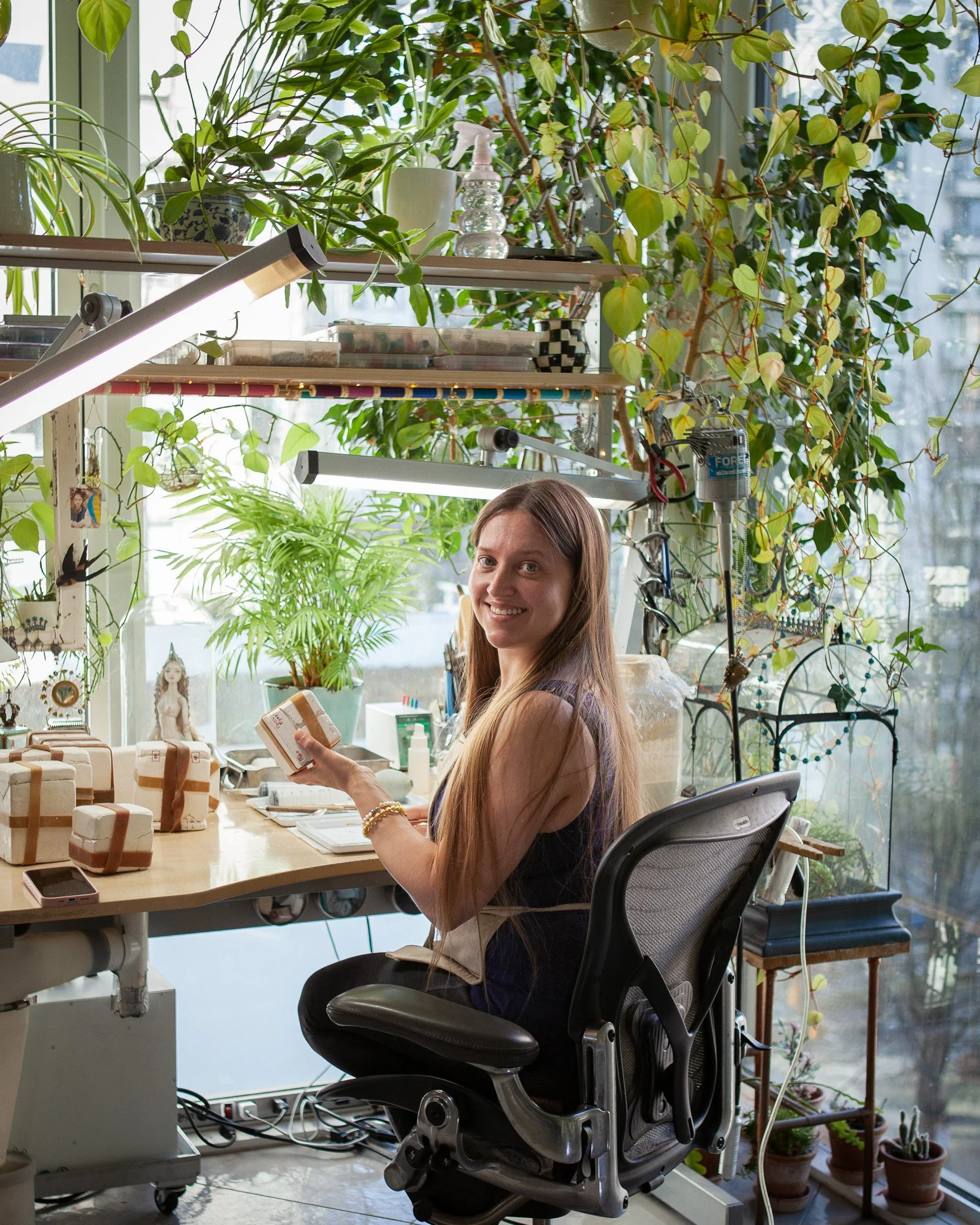
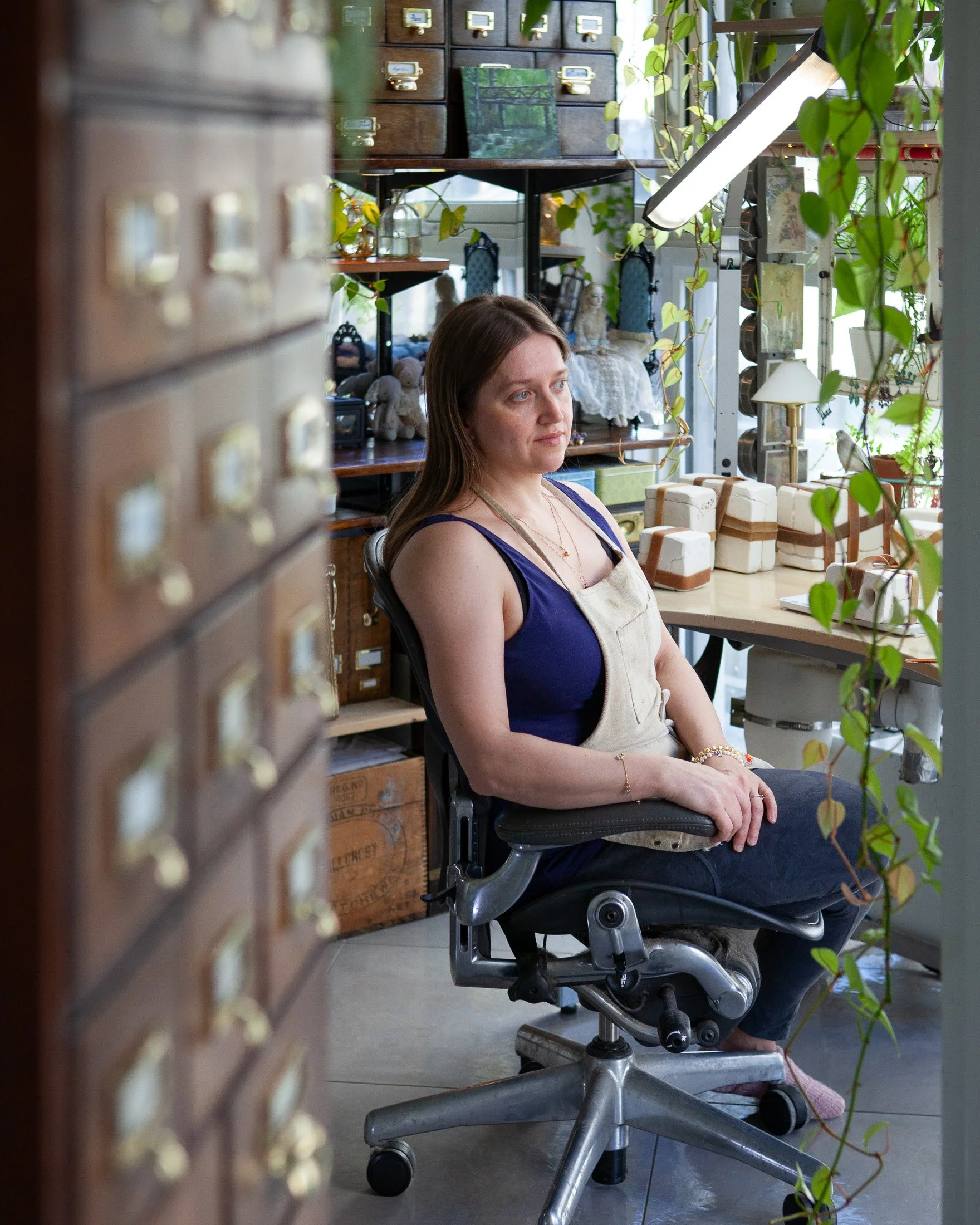
I just needed a long break from social media, because the News is giving me nightmares these days.🤯😱😵 I can’t even believe what’s going on in the world… Art is the only refuge. Whoever said that beauty will save the world… I hope they were right. And I hope my art can help even a tiny little bit. So I’m back.
Dressing Cinderella for her photoshoot in her gold-plated metal costume.
Read MoreThe work on the one of a kind auction doll Serenity continues!
Read MoreNot each firing is successful, and not all hard work gets a rightly earned reward.
Read MoreJust like a human shoulder, if a doll shoulder is over-rotated inside its socket, it can sometimes dislocate.
Read MoreI updated the traditional lace-up method, with a simpler and more elegant solution - snaps! It now takes a fraction of the time and only a few simple hand motions to corset and un-corset a doll!
Read MoreThis glowing creature is Gisèle, she is one of my favourite custom orders from last year. The flower in her hair, is an antique 18k rose gold and glass-enamel pin, with a genuine diamond in the centre! Her delicate complexion beautifully captures the unique translucency of white porcelain. To achieve this look, I gradually built up her skin tone by blushing on several nearly transparent layers of China-paint between multiple kiln firings.